
Typing can feel painfully slow when the sentence is already clear in your head. Modern voice typing turns speech into text, then some tools clean up filler words and format the result. Here are 10 strong picks, with Typally first for cross-platform work, custom vocabulary, and privacy-minded cloud transcription.
Table of Contents
- Typally
- Wispr Flow, cross-platform dictation for any app
- Apple Dictation, private built-in dictation for Mac and iPhone
- Windows Voice Access, hands-free control on Windows 11
- Google Docs Voice Typing, simple browser-based dictation
- OpenWhispr, local and cloud processing with Linux support
- Weesper Neon Flow, offline AI dictation on desktop
- Microsoft Word Dictate, dictation across Microsoft 365
- Dragon Professional Anywhere, advanced business dictation
- Gboard, mobile voice typing for Android and iPhone
- Side-by-Side Comparison of the Best Voice Typing Software
- What to Look For in Voice Typing Software
- Frequently Asked Questions
- Conclusion
1. Typally
Typally is a speech-to-text app for Windows and Mac that puts clean text into the app you're using. It's best for people who write across email, chat, documents, browsers, code editors, and other daily tools.
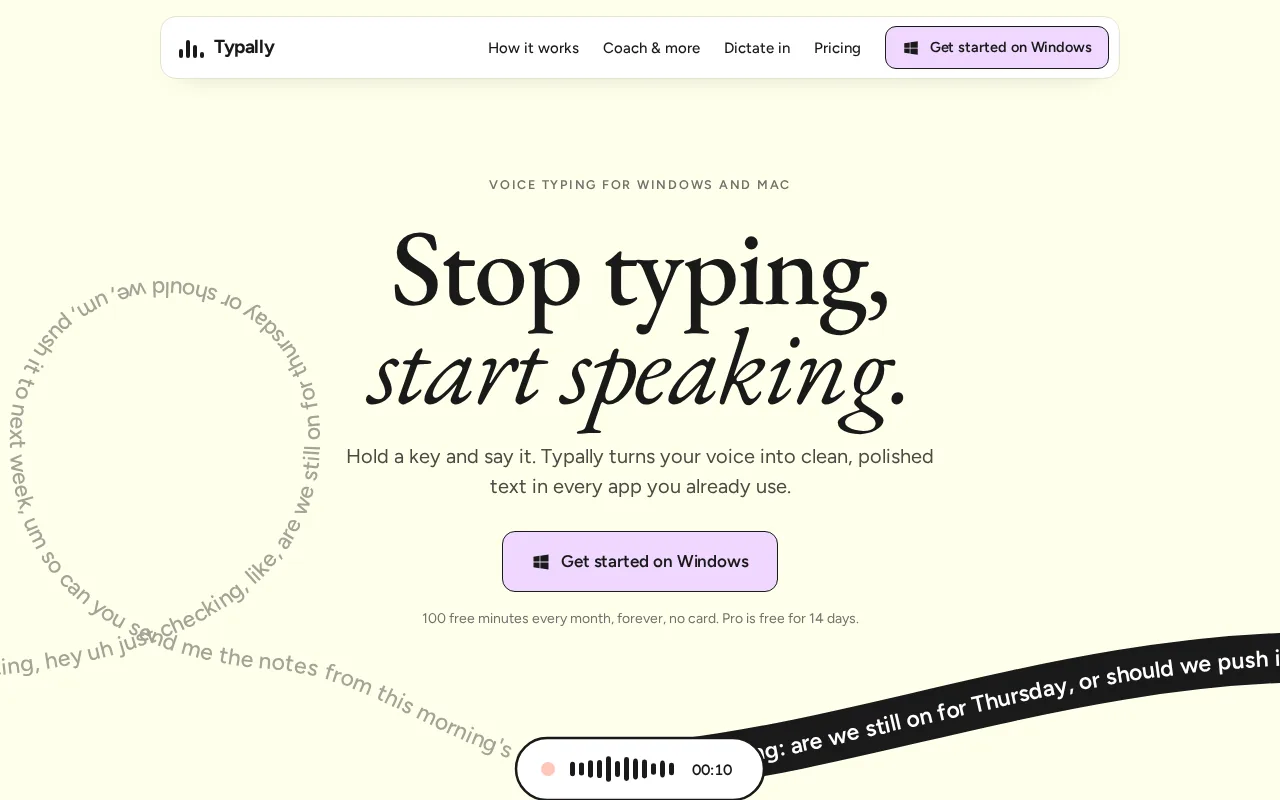
The key difference is custom vocabulary. You can teach Typally names, industry terms, product language, or technical words that general dictation tools often miss. That matters when a wrong term creates more editing work than the original typing would have.
Typally also cleans up spoken filler. Say, “Heyso umcan you send the draft today?” and the finished text can read, “Can you send the draft today?” The goal is a usable first draft, not a raw transcript packed with every pause.
Its cloud processing model is paired with encrypted transcription and immediate local discard. That gives you the speed of online speech recognition without keeping the utterance on the device after processing. Typally also tracks vocabulary and filler words, which can help you spot habits while you learn English.
It fits especially well when you switch between Windows and macOS. A single voice workflow is easier than learning one set of shortcuts at work and another at home. You can also use Typally across tools such as Gmail, Slack, Microsoft Word, WhatsApp, web browsers, code editors, and Google Meet.
The caveat is simple: Typally uses cloud processing, so it isn't the right fit if your policy requires speech recognition to stay fully offline. For most people who want clean text in any app, though, it is the most balanced starting point. You can also read these voice typing guides for dictating in common apps when you want app-specific tips.
2. Wispr Flow, cross-platform dictation for any app
Wispr Flow is a cross-platform dictation app for people who want polished text inside many applications. It supports macOS, Windows, iOS, and Android.
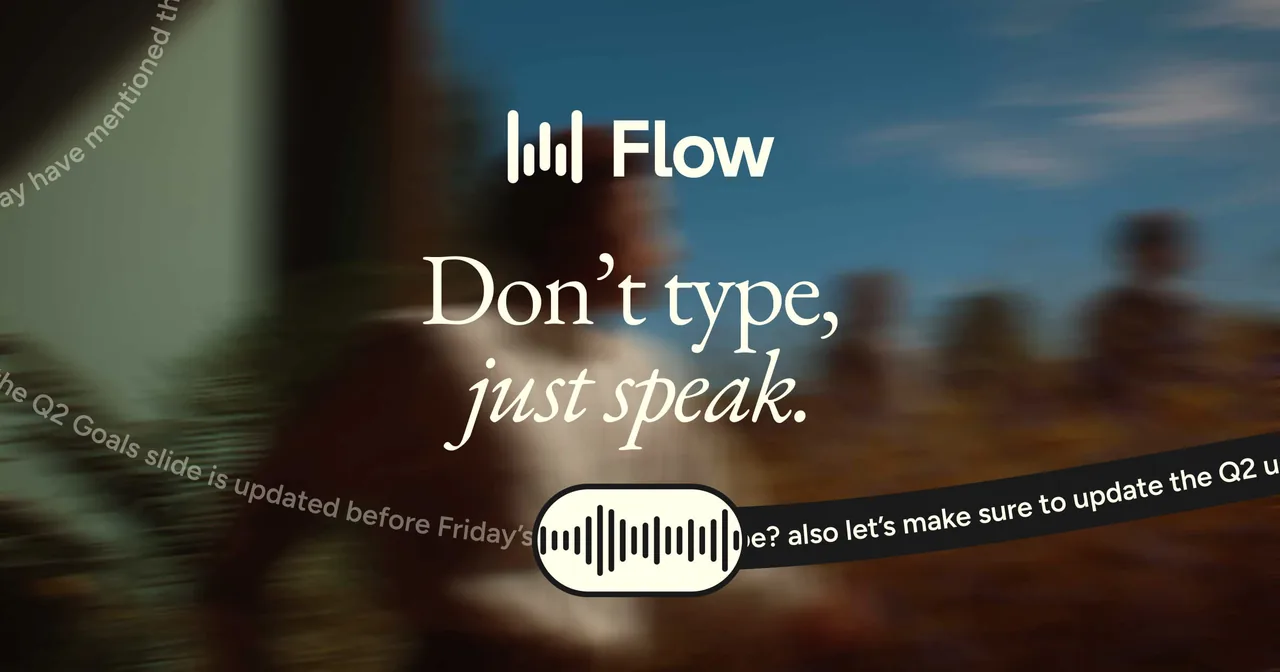
Its appeal is the handoff from speech to finished copy. Wispr Flow can remove filler words and support custom dictionary terms. That makes it more useful for a long email or project note than a basic microphone button that produces a rough transcript.
The app works across applications rather than limiting you to one editor. That helps when your morning moves from a browser form to a chat window, then into a document. You don't need to copy speech into a separate page first.
Its privacy model says data is encrypted during transit and at rest on its servers. It doesn't provide offline transcription, so you need an internet connection for the main workflow. That's the trade: broad access and cloud processing instead of local-only speech recognition.
Wispr Flow has a free weekly tier, while paid use is aimed at people who dictate often. Limits can differ by platform, so check the current plan before you build a high-volume workflow around it. It makes sense for people who value cross-device access more than offline use.
3. Apple Dictation, private built-in dictation for Mac and iPhone
Apple Dictation is the simplest voice typing choice for people already using macOS or iOS. It is built in, quick to start, and suited to messages, notes, search boxes, and short drafts.
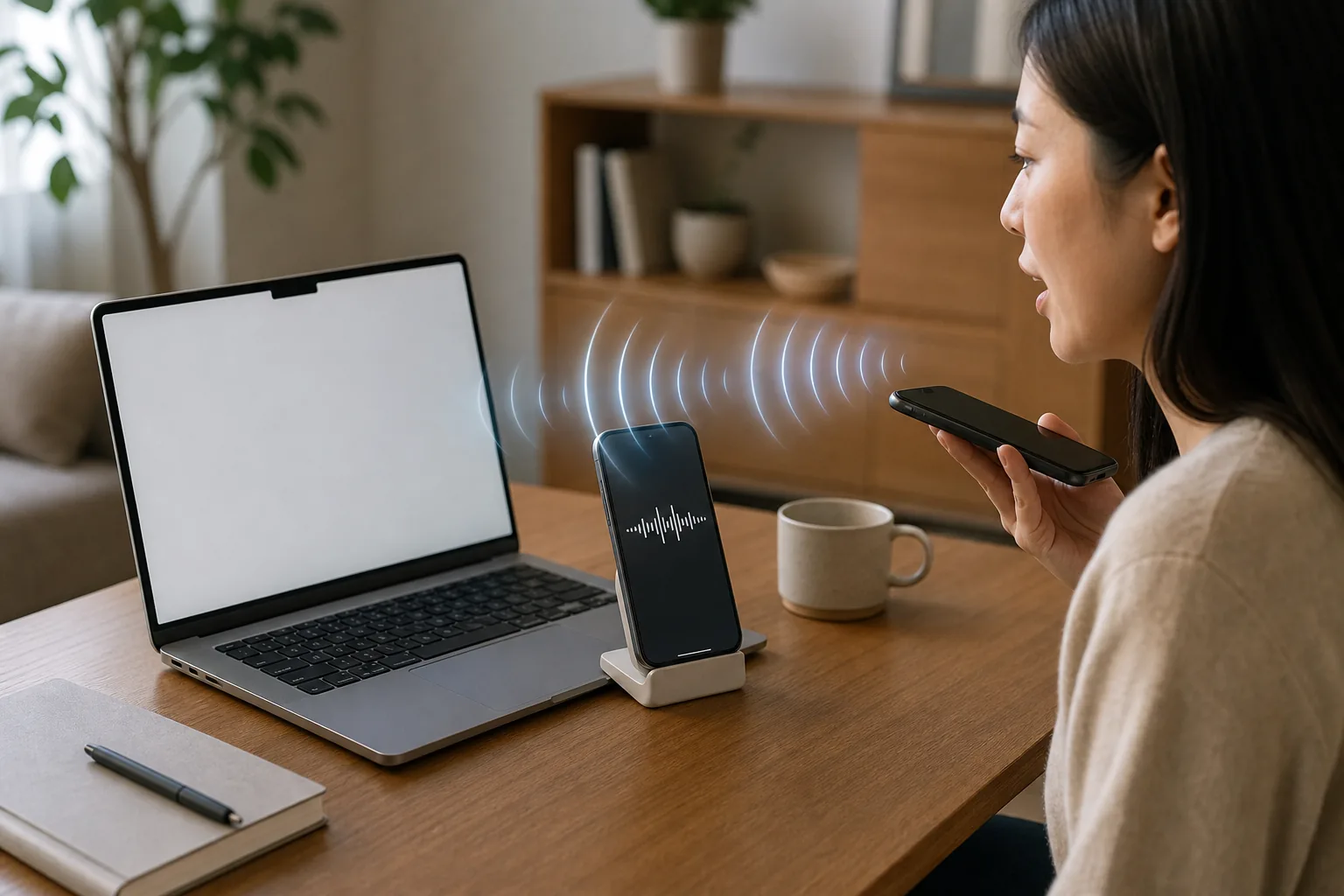
Apple processes speech locally for supported dictation use, and it can work without an internet connection. That makes it a good choice for private notes or travel when you don't want to rely on a signal.
The setup is almost invisible. Open a text field, trigger dictation, and speak. You can say punctuation such as “comma,” “period,” or “new paragraph,” though the exact command set and behavior can vary by device and system version.
Apple Dictation is less flexible than a dedicated writing app. If you dictate only short bursts, that may not matter. If you write pages each day, it can leave more editing behind.
Choose it when free, built-in access and local processing matter most. Choose a dedicated app when you need learned terms or a cleaner first draft.
4. Windows Voice Access, hands-free control on Windows 11
Windows Voice Access is the Windows 11 option for dictation plus hands-free computer control. It suits users who want to speak text and operate parts of the desktop without reaching for a mouse.
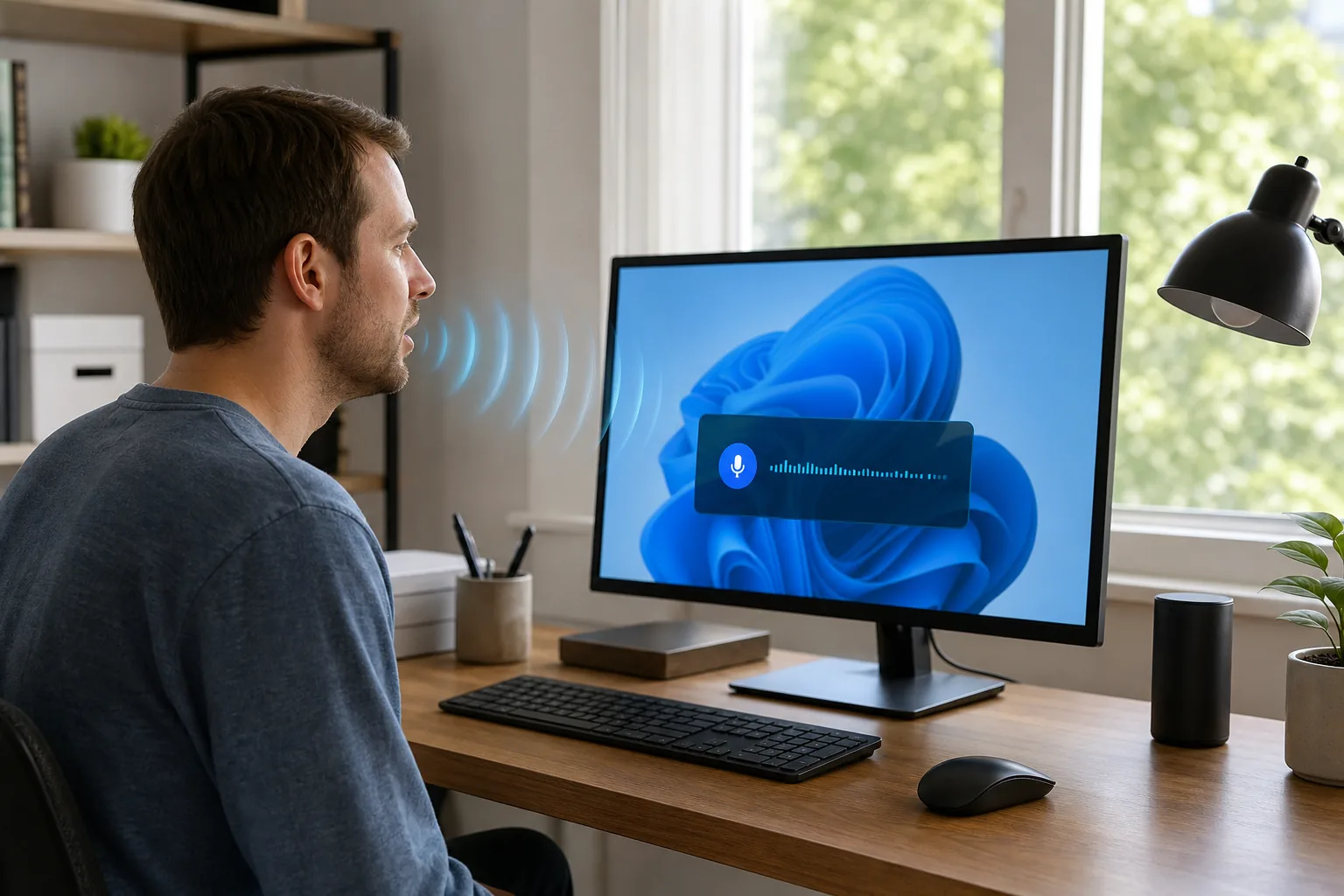
Windows voice typing can handle commands such as “new paragraph,” “delete that,” and “select that.” Voice Access goes further by letting you open apps, control windows, and work with on-screen controls. For accessibility, that wider control can matter more than transcription alone.
The limitation is platform scope. It is a strong free starting point for Windows users, but it won't follow you to a Mac or phone.
Use it when you need voice control of the PC. Use Typally when your main goal is clean text across both major desktop systems.
5. Google Docs Voice Typing, simple browser-based dictation
Google Docs Voice Typing is a free browser tool for people who write inside Google Docs. It is best for a quick first draft when you don't need dictation in every app.

Open a document, choose Voice typing from the Tools menu, then speak into the microphone. You can say punctuation and commands such as “new line,” “new paragraph,” or “bold.” The tool can also let you select and edit text by voice, which makes it more than a basic transcript box.
Google Docs supports language and dialect choices inside the voice typing control. That helps when your speech doesn't match the default setting. Still, accuracy depends on your microphone, room noise, accent, and how clearly you speak.
The tradeoff is privacy and reach. It also stays tied to Google Docs, so it won't type directly into a support ticket, desktop chat app, or code editor.
Google Docs Voice Typing is a sensible free test. If you like speaking but dislike moving text between apps, a system-wide tool will save more time.
6. OpenWhispr, local and cloud processing with Linux support
OpenWhispr is a desktop dictation tool with support for macOS, Windows, and Linux. It fits users who want a choice between local processing and cloud processing.
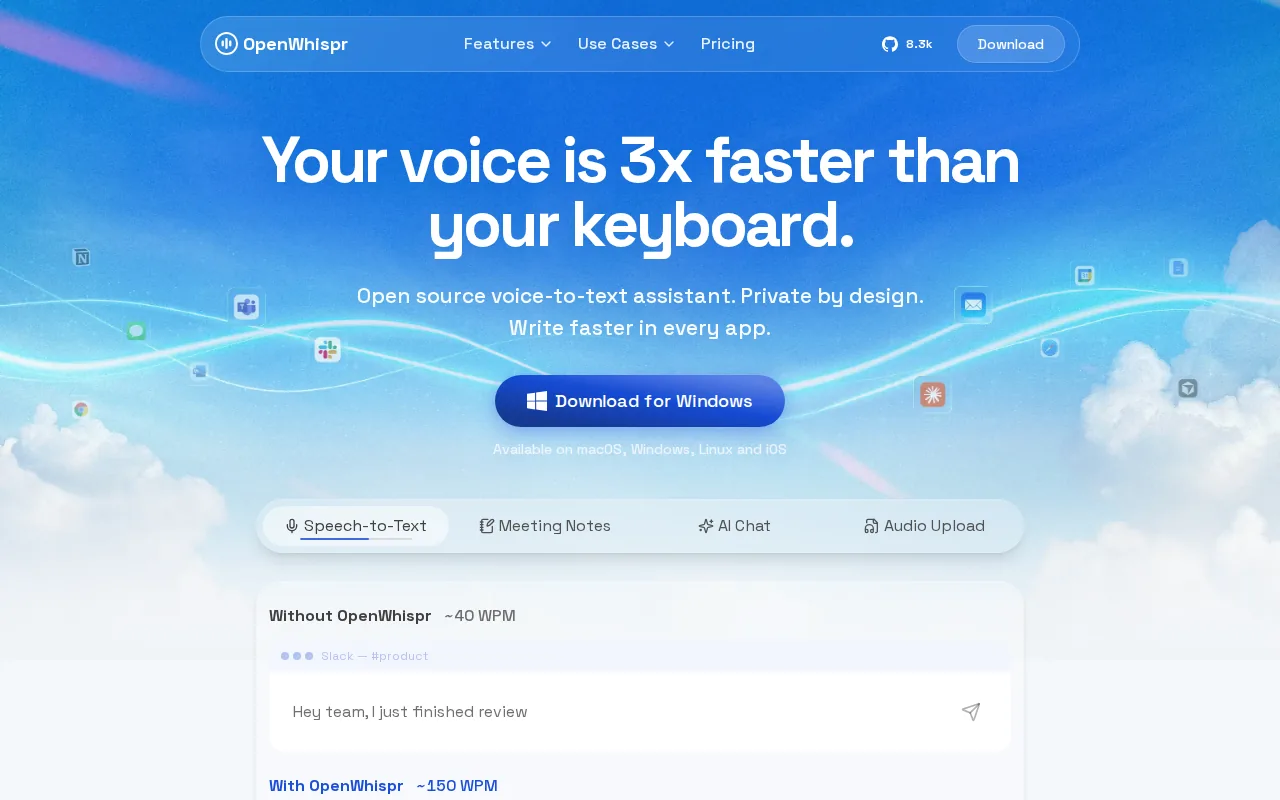
Its custom dictionary is useful for names, product terms, commands, and technical language. The ability to add terms gives it an edge over built-in tools that may repeat the same spelling mistake.
OpenWhispr supports offline transcription. That is important for confidential drafts, weak internet connections, or Linux setups where browser-based options may feel limited. You can choose a local workflow when data control matters, then use cloud processing when speed or device limits make that a better fit.
Linux support is the main reason to consider it. Many well-known voice typing tools focus on Windows, macOS, iOS, and Android. OpenWhispr gives Linux users a named option instead of forcing them into a browser tab.
The caveat is that local speech recognition can depend on your computer and model setup. Test it with your own microphone and vocabulary before moving a full workday onto it.
7. Weesper Neon Flow, offline AI dictation on desktop
Weesper Neon Flow is an offline desktop dictation tool for macOS and Windows. It is aimed at people who want speech processed on their own computer.
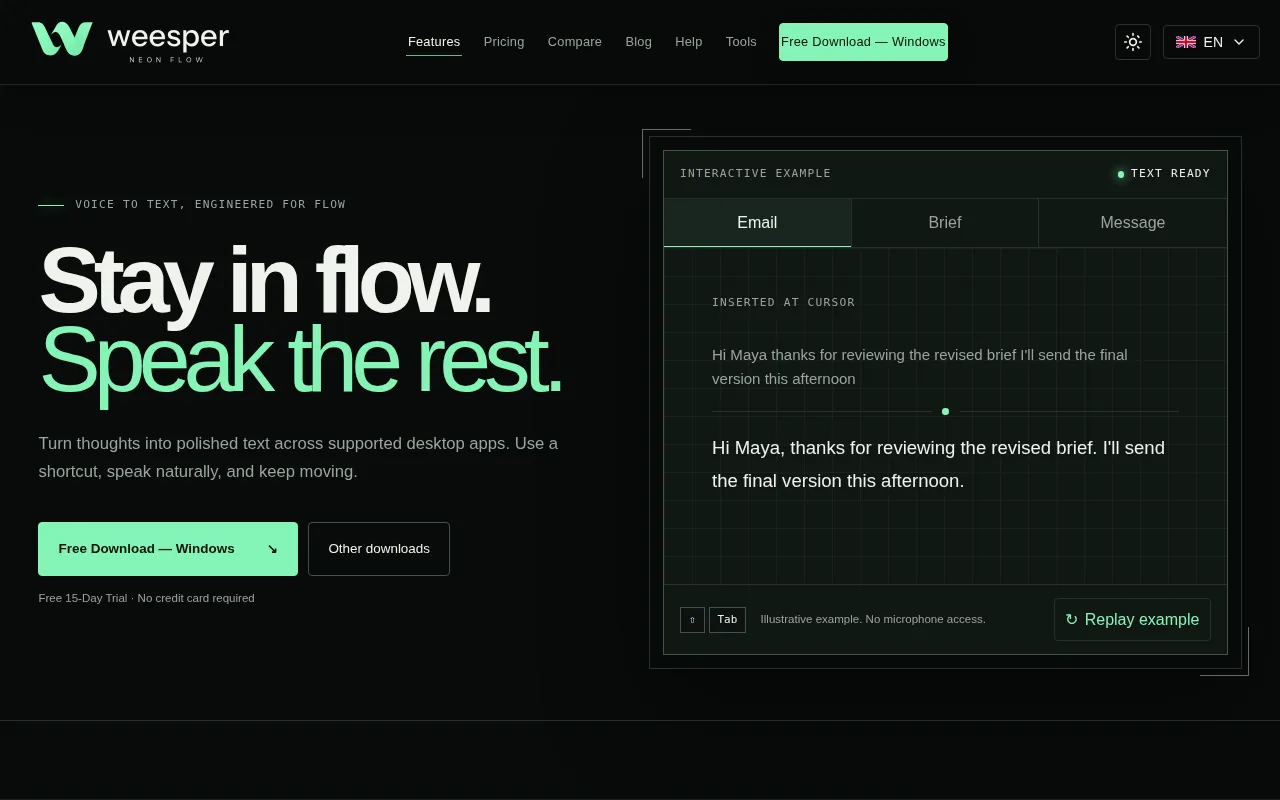
Its offline model uses Whisper with support for local hardware paths such as Metal and CUDA. In plain English, the app can use the processing power available on your Mac or compatible graphics hardware instead of sending speech to a remote server.
That makes it a fit for private notes, internal documents, and work done without reliable internet. It also avoids the long-term storage questions that come with cloud-first tools.
It also doesn't give you the same broad app coverage or custom vocabulary detail that makes Typally useful for daily cross-app writing.
Offline use is the deciding factor here. If a document must stay on your machine, start with a local tool. If you want a smoother workflow across devices and apps, accept the cloud tradeoff and compare cloud privacy terms closely.
8. Microsoft Word Dictate, dictation across Microsoft 365
Microsoft Word Dictate is a writing-focused voice typing feature inside Word, OneNote, and Outlook. It works on web, macOS, Windows, iOS, and Android.
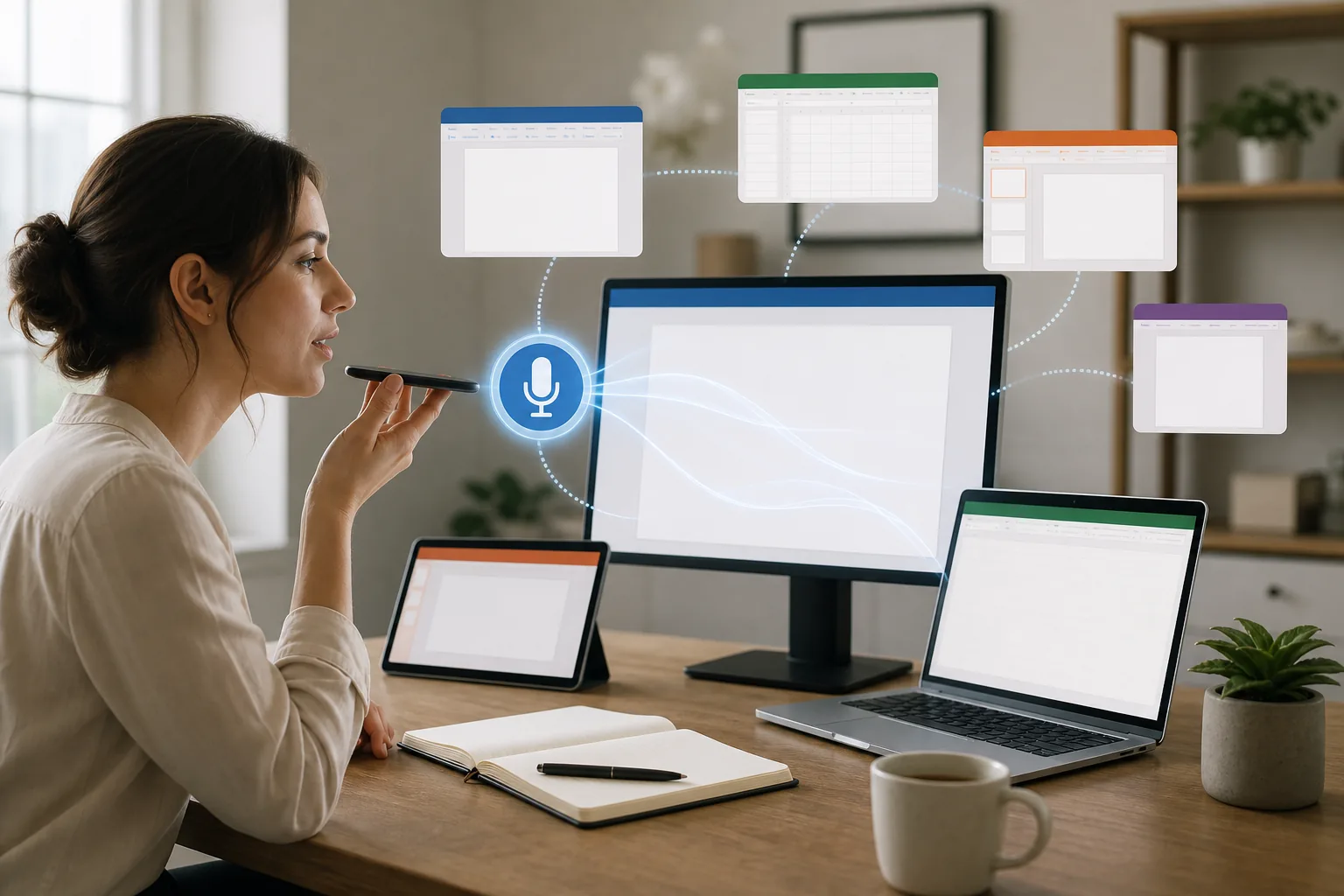
Its strongest point is live text inside a document. You can watch words appear while you speak, then use commands for punctuation, formatting, navigation, and edits. That suits reports, drafts, and long documents where you want to stay inside Word.
Word Dictate is free in the web and mobile apps. Desktop access is tied to Microsoft 365 plans. The exact plan price can change, so treat the subscription as part of your wider Office decision rather than buying it only for dictation.
Microsoft says its speech service does not store audio data or transcribed text in the comparison research. Windows also gives users controls for online speech recognition and optional voice clip contribution. Those are separate privacy questions worth checking if you use a work account.
The weakness is scope. Word Dictate works best inside Microsoft's own apps and doesn't provide the same custom vocabulary depth as Typally or Dragon Professional Anywhere. It is a good pick for Office users who want free or included dictation without installing another desktop layer.
9. Dragon Professional Anywhere, advanced business dictation
Dragon Professional Anywhere is business dictation software for Windows and mobile users who need specialized vocabulary and office app support.

Dragon is built for more than short notes. Its custom dictation vocabulary helps with legal, medical, and company-specific terms. That matters when correcting a name or acronym takes longer than speaking the whole sentence.
It also has a deep command model. Users can dictate, edit, format, and move through documents by voice. For people with mobility needs or heavy hands-free workflows, that control can be the reason to choose Dragon over a lighter transcription app.
The main limitation is its platform fit. It is also more setup-heavy than built-in dictation, so occasional users may find it excessive.
Pick Dragon when specialized vocabulary and voice control of office work matter more than a simple cross-platform setup. For everyday email and chat, a lighter tool usually makes more sense.
10. Gboard, mobile voice typing for Android and iPhone
Gboard is a mobile keyboard with voice typing for Android and iPhone. It is best for quick messages, searches, notes, and short replies.
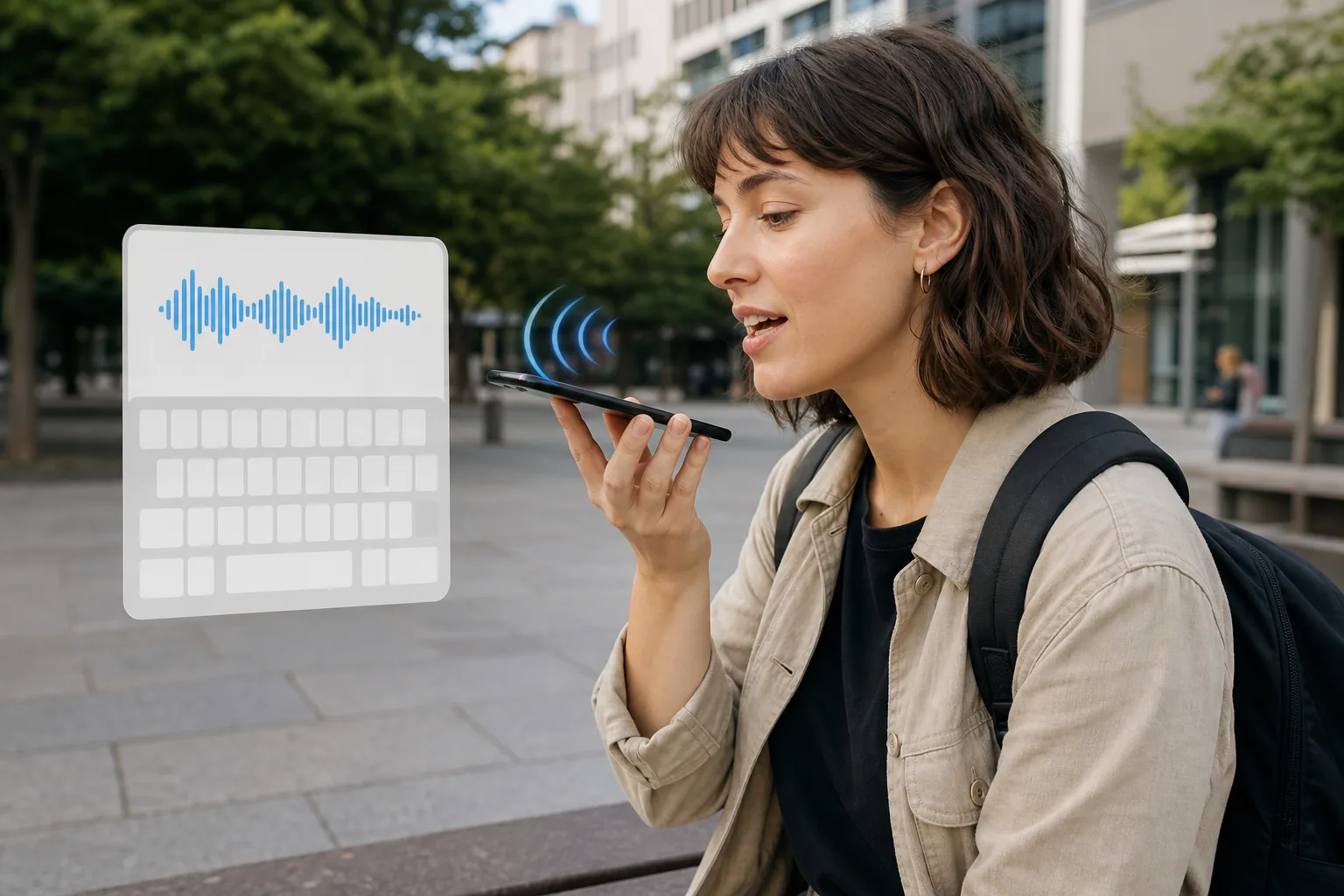
Because the microphone sits inside the keyboard, you can dictate in many apps without installing a separate desktop tool. That low friction is the point. Tap the microphone, speak, and return to the keyboard when you need to fix a word.
Gboard supports voice typing on iOS and Android through its mobile keyboard. It is designed for mobile use rather than as a standalone desktop dictation application, so its usefulness depends on the phone and apps where the keyboard is available.
Gboard is convenient, but it isn't a full desktop writing system. Choose it for mobile speed. Choose Typally or another desktop tool when you need long-form writing across work apps.
Side-by-Side Comparison of the Best Voice Typing Software
The best voice typing software depends on where you work and what happens to your speech after you say it. The table below focuses on the decision that usually matters most, not a pile of feature checkboxes.
| Tool | Best fit | Platform reach | Offline option | Custom vocabulary |
|---|---|---|---|---|
| Typally | Cross-app desktop writing | Windows, Mac | No, cloud processing | Yes |
| Wispr Flow | Cross-device AI dictation | Windows, Mac, iOS, Android | No | Yes |
| Apple Dictation | Short private Apple dictation | Mac, iPhone | Yes | No |
| Windows Voice Access | Windows control and dictation | Windows 11 | No | No |
| Google Docs Voice Typing | Free browser drafting | Google Docs | No | No |
| OpenWhispr | Linux and local processing | Mac, Windows, Linux | Yes | Yes |
| Weesper Neon Flow | Offline desktop dictation | Mac, Windows | Yes | — |
| Microsoft Word Dictate | Office documents | Web, Mac, Windows, mobile | — | No |
| Dragon Professional Anywhere | Specialized business dictation | Windows, mobile | No | Yes |
| Gboard | Mobile messages and notes | Android, iPhone | — | — |
For most desktop writers, Typally is the strongest first test because it combines cross-OS support, custom vocabulary, and text cleanup. For strict offline work, start with OpenWhispr or Weesper Neon Flow. For a free built-in option, use Apple Dictation, Windows Voice Access, Google Docs, Word Dictate, or Gboard based on your device.
What to Look For in Voice Typing Software
When you compare voice typing software, accuracy is only the first filter. A tool can recognize words well and still waste time if it makes you copy text between apps or correct the same technical term every day.
Accuracy and cleanup. Test a full paragraph, not a single sentence. Include names, numbers, punctuation, and words from your work. AI cleanup can remove filler, but review important text because cleanup may change meaning.
Commands. Look for commands such as “period,” “new paragraph,” “delete that,” and “bold that.” Editing by voice matters most when you can't easily switch to a keyboard or mouse.
Privacy. Ask where speech is processed, whether audio is stored, and whether transcripts are used for service improvement. Offline tools keep processing on your machine. Cloud tools may be faster, but their retention rules deserve a close read.
Vocabulary. Custom terms are rare. If you write about medicine, law, code, finance, or internal products, this feature can save more time than a small accuracy difference.
Cost and limits. Built-in tools are free. Dedicated apps may use free word caps, monthly plans, annual billing, or one-time licenses. Work out your weekly speaking volume before you compare prices.
Microphone and room. A quiet room and a mic close to your mouth help every tool. If recognition is poor, test the microphone before blaming the software. Speak punctuation out loud when automatic punctuation misses your intent.
Frequently Asked Questions
What is the best voice typing software for Windows?
Typally is the best starting point for Windows users who want clean text across many apps. Windows Voice Access is better when hands-free control of the computer matters most. Microsoft Word Dictate fits people who spend most of the day in Microsoft 365. Your choice should depend on app coverage, vocabulary needs, and privacy rules.
What is the best voice typing software for Mac?
Typally is a strong Mac choice for cross-app writing and custom vocabulary. Apple Dictation is the simplest free option, especially for short notes and private offline use. Weesper Neon Flow is worth considering when offline desktop processing is the main requirement.
Can voice typing software work offline?
Yes, some voice typing software works offline, but not all tools do. Apple Dictation, OpenWhispr, and Weesper Neon Flow are listed with offline transcription. Google Docs Voice Typing and Wispr Flow require cloud processing. Check the privacy model as well as the offline label, since local and cloud modes can differ.
Is voice typing faster than typing?
Voice typing can be faster than keyboard input once you learn punctuation and editing commands. Your result depends on speaking pace, microphone quality, room noise, accent, and correction time. The best test is a sample from your own work. Measure finished text, not the raw words captured before edits.
What voice typing software is best for accessibility?
Windows Voice Access and Dragon Professional Anywhere are strong choices when voice control must include desktop actions. They can help with selection, editing, navigation, and application control. A simple dictation app may be enough for text entry, but users who cannot rely on a mouse should test full command support before choosing.
Does voice typing software keep audio recordings?
It depends on the product and its privacy policy. Apple Dictation and offline tools process speech on the device. Cloud tools may send audio for recognition, with different rules for retention and encryption. Before dictating sensitive material, check storage, training use, account access, and whether the service supports local processing.
Conclusion
Start with Typally if you want clean voice-written text across Windows and Mac, especially when your work includes custom terms. Speak a short sample from your daily workflow, add the words the tool needs to learn, and judge the finished draft.